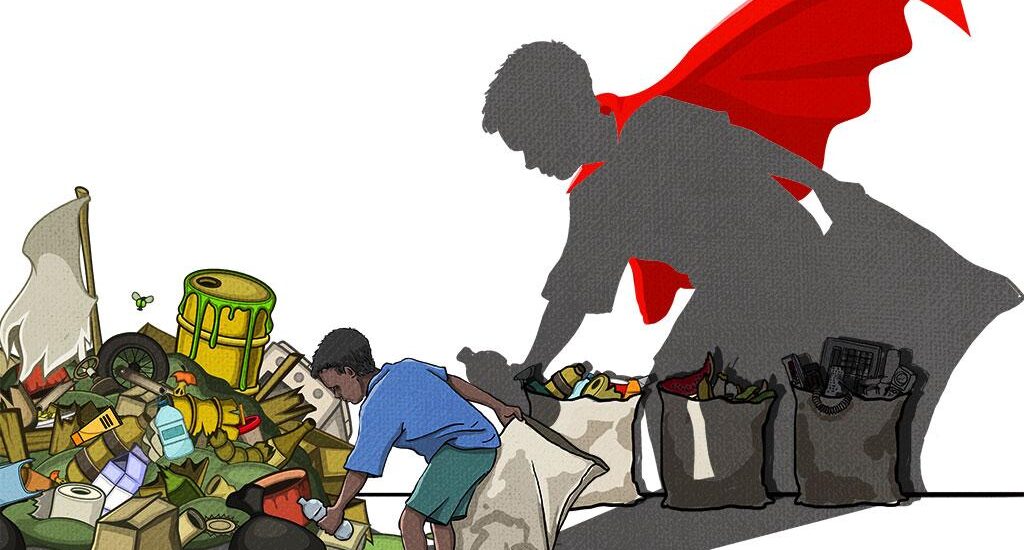
The clamour of sustainability ideas and practices now dominates the urban agenda, yet behind the glossy narrative lies an informal workforce largely absent from the public record. In waste management, informality refers to sorting, collection and recycling outside formal structures—by waste pickers, aggregators and small-scale traders. Beneath the ‘sustainable city’ storyline of sophisticated facilities and green targets, the actual recovery of materials often depends on them. With agile reach and low operating costs, this ecosystem keeps valuable materials in circulation and animates the circular economy, yet it is barely captured in official statistics—a camouflage that obscures who the real key workers are.
Their work, however, typically proceeds without adequate protection: health risks, price volatility, social stigma and uncertain incomes are commonplace. While cities celebrate recycling milestones, the externalities—from exposure to hazardous substances to market swings—are borne by informal actors who remain unrecognised in governance. If so, who are the true heroes of urban waste systems?
A just response brings these workers from the margins to the centre of governance: legal recognition, performance-based contracts with municipalities or operators, and integration into material recovery facilities. Floor-price policies, Extended Producer Responsibility (EPR) schemes and recycled-content procurement quotas can help stabilise markets. At the operational level, co-operatives, access to PPE, social protection, quality assurance training and digital payments improve livelihoods while lifting recycling performance. Only when these invisible heroes are recognised and protected will claims of ‘sustainable cities’ cease to be mere camouflage.